
When people picture Italian motorcycling, they tend to picture noise, colour and an almost reckless appetite for racing. Few marques embody that spirit more completely than Aprilia. In the space of a single lifetime it grew from a small family bicycle shop into the most successful European manufacturer in Grand Prix history — and, in the 2020s, into a genuine MotoGP title contender. This is how it happened.
Origin Story
The story of Aprilia begins in 1945, in the town of Noale in the Veneto region of northern Italy, where Cavaliere Alberto Beggio opened a small workshop building bicycles. (The honorific "Cavaliere" is an Italian order-of-merit knighthood, roughly equivalent to "Sir.") For more than two decades, that is exactly what Aprilia was: an artisan bicycle maker, its wheels turned by pedals rather than pistons.
The turning point came in 1968, when Alberto's 24-year-old son, Ivano Beggio, took over the business. Ivano ended bicycle production and built Aprilia's first powered vehicle — a 50cc, two-stroke moped finished in gold and blue. He would remain the driving force behind the company for the next 35 years, steering it through every major transformation: into off-road competition in the 1970s, into road and sport bikes in the 1980s, into Grand Prix glory in the 1990s, and into the scooter boom that made Aprilia one of the largest two-wheeler producers in Italy.
Today Aprilia is a brand of the Piaggio Group, the largest European manufacturer of two-wheeled vehicles and one of the biggest motorcycle groups in the world. But its identity has never really changed. Aprilia remains, at heart, exactly what Ivano Beggio built: a company that exists to race.
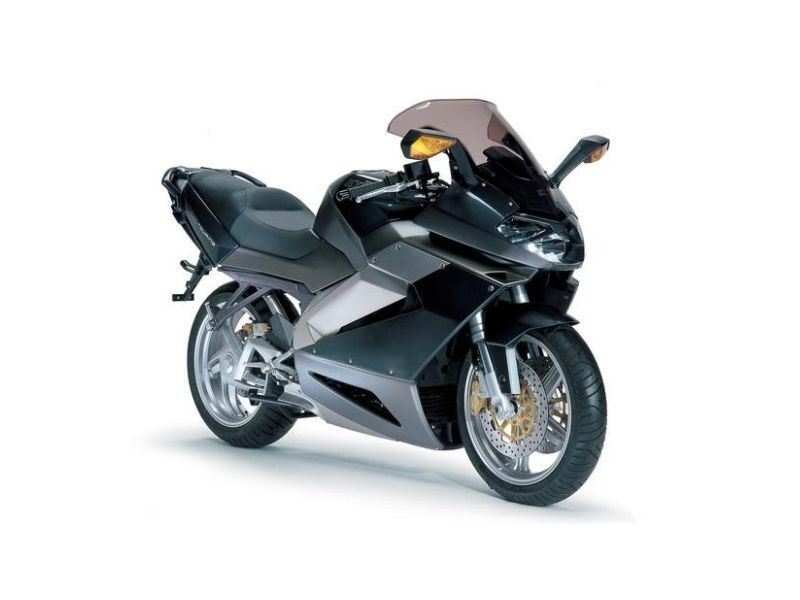
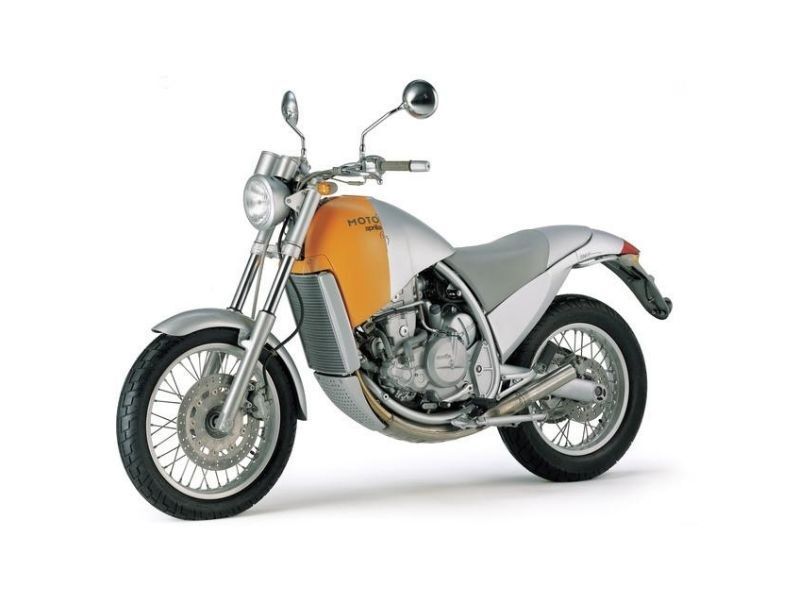
Where the name comes from
There are two stories about the Aprilia name, and it is worth being precise about them because they are often confused.
The documented explanation, given by Ivano Beggio himself in interviews, is that the name was borrowed from the Lancia Aprilia, an elegant, wind-tunnel-developed sedan that Lancia launched in 1937 and that the Beggio family admired.
The other story — that "Aprilia" derives from the Latin Venus Aprilia ("Venus fertilises"), linking the month of April to the Roman goddess of love — is genuine word etymology, but it is folklore as far as the motorcycle company is concerned. No credible company history ties the brand to Venus or to April; that version circulates mainly on baby-name websites. The name honours a car, not a goddess.
The First Aprilias: Mopeds, Then Motorcycles
It is easy to get the earliest models tangled up, so here is the clean version.
Aprilia's first powered products, in 1968, were mopeds — the 50cc two-stroke Colibrì and Daniela (some sources add a third, the Packi). These were simple, affordable machines built for a postwar Italy that wanted cheap mobility.
Aprilia's first true motorcycle arrived in 1970: the Scarabeo, an off-road machine shown that January as a 50cc, with a 125cc version following at the 1971 Milan Show. The Scarabeo was Aprilia's first proper motorcycle and the ancestor of everything that followed. (A quick word of caution for collectors: the original Scarabeo of 1970 is a dirt bike, and has nothing to do with the modern high-wheel Scarabeo scooter launched in 1993, which simply revived the historic name.)
Through the 1970s Aprilia expanded its off-road range, most notably with the road-legal RC series of enduro bikes in 50, 125 and 250cc. Output grew quickly — from around 150 mopeds in 1969 to some 12,000 units a year by the end of the decade, with roughly a fifth of production exported.
Into Competition: The Off-Road Years
Aprilia's first taste of international racing was not on tarmac. Ivano Beggio understood that racing sold motorcycles, and the cheapest, most visible way in was motocross.
Aprilia built its first true motocross bike in 1974, formed a dedicated race department (the Reparto Corse) in 1975, and contested the 125cc Motocross World Championship from 1976 to 1981. The early highlight came in 1977, when Ivan Alborghetti won both the Italian 125cc and 250cc motocross championships on Aprilias. On the world stage, Aprilia's best result was fifth in 1979.
These were formative years. They established the template Aprilia would follow for the rest of its history: pick a class, engineer cleverly, punch above your weight, and turn race results into road-bike credibility.
The 1980s: Road Bikes, Rotax and the Move to Grand Prix
The early-1980s market downturn pushed Aprilia to broaden its range from pure off-road machines into street and sport bikes spanning 50 to 600cc. Two decisions in this decade set up everything that came later.
The first was the 1985 engine partnership with the Austrian firm Rotax, which supplied the powerplants for Aprilia's road and race bikes for years to come. Rotax's compact, potent two-stroke singles and tandem-twins were the technical foundation of Aprilia's rise.
The second was the arrival of the AF1, a race-replica sportbike that became a cult object for a generation of young European riders. The AF1 50 launched in 1986 and the definitive liquid-cooled AF1 125 followed in 1987, packing exotic details — a single-sided swingarm, upside-down forks on later versions — that made it feel like a genuine miniature superbike.
Crucially, this is also the decade Aprilia went Grand Prix road racing. It entered the 250cc World Championship in 1985 with rider Loris Reggiani, and on 30 August 1987, at Misano, Reggiani scored Aprilia's first-ever Grand Prix victory aboard the AF1 250. It was a single race win rather than a title — but it was the moment Aprilia announced itself to the racing world.
The 1990s: The Golden Age of Grand Prix
If the 1980s were the setup, the 1990s were the payoff. Across the 125cc and 250cc classes, Aprilia became the dominant European force in Grand Prix racing and launched some of the sport's greatest careers.
The breakthrough came in 1992, when Alessandro Gramigni won the 125cc World Championship — Aprilia's first world title. From there the wins piled up:
- Max Biaggi won three consecutive 250cc World Championships on Aprilia in 1994, 1995 and 1996, riding the famous black Chesterfield-liveried machine. (Biaggi took a fourth straight 250 crown in 1997, but that one was on a Honda — a common point of confusion.)
- Kazuto Sakata won the 125cc title in 1994 and again in 1998.
- A young Valentino Rossi rode Aprilias from 1996 to 1999, winning the 125cc World Championship in 1997 and the 250cc World Championship in 1999 before moving to the premier class and superstardom.
- Loris Capirossi took the 250cc title in 1998.
Aprilia also branched out with an unconventional V-twin 500cc premier-class project between 1994 and 1997 — a lightweight, nimble underdog against the full-power V4s of the era. Its best result was a third place for Doriano Romboni at the 1997 Dutch TT before the project was shelved.
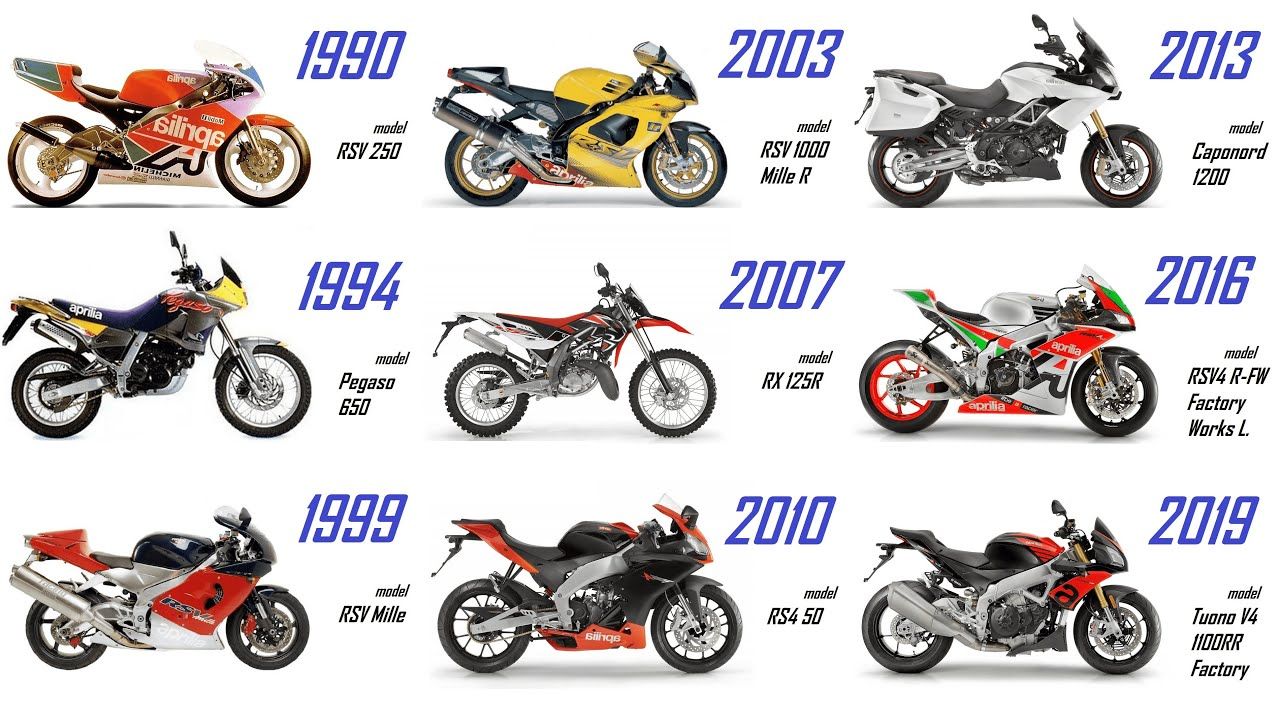
By the end of the decade Aprilia had also expanded far beyond racing. The launch of the four-stroke Scarabeo scooter in 1993 and a range of two-stroke sports scooters rode the European scooter boom, and Aprilia's road range grew to include the RS125 and RS250 two-stroke sportbikes that put GP technology within reach of ordinary riders. In 1998 it moved decisively upmarket with the RSV Mille, a 1000cc V-twin superbike that gave birth to the naked Tuono family.
The 2000s: New Peaks, Then Crisis
The new millennium opened with Aprilia still winning championships and pushing into new categories.
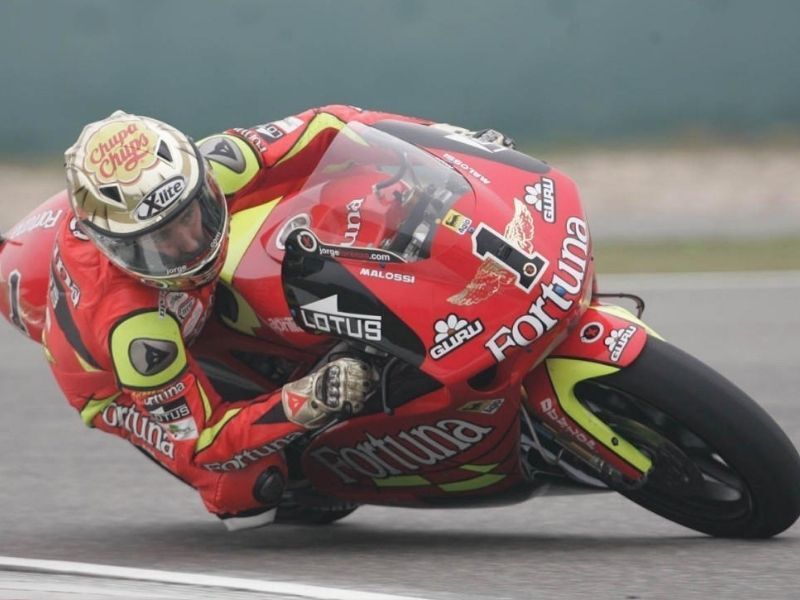
On track, the titles kept coming. Roberto Locatelli won the 125cc crown in 2000; Marco Melandri (250cc, 2002) and Arnaud Vincent (125cc, 2002) added more; Manuel Poggiali took the 250cc title in 2003; and a young Jorge Lorenzo won back-to-back 250cc World Championships in 2006 and 2007, with Álvaro Bautista taking the 125cc title in 2006. Aprilia also became a force in the FIM Supermoto World Championship from 2004 with its SXV V-twins.
Aprilia's most ambitious project of the era was the RS Cube, its entry into the new four-stroke MotoGP class from 2002 to 2004. A 990cc inline-triple developed with heavy input from Formula 1 engine specialist Cosworth, the Cube was a genuine technical pioneer — among the first MotoGP bikes with pneumatic valves, ride-by-wire throttle and traction control. It was ferociously powerful and ferociously difficult to ride, and results never matched its top speed. Aprilia withdrew from MotoGP after 2004.
That withdrawal was not only about racing. Around 2003–2004 Aprilia hit a severe financial crisis. Expensive acquisitions of the historic marques Moto Guzzi and Laverda in 2000, a downturn in scooter sales, unfavourable exchange rates and the cost of the MotoGP programme combined to drain the company. By 2004, credit had dried up and production had stalled.
The rescue came from within the Italian motorcycle industry. In December 2004, the Piaggio Group acquired the Aprilia Group (Moto Guzzi included) in a recapitalisation and debt-restructuring deal, seeing off a rival bid from Ducati. The merger created one of the largest two-wheeler groups in the world. Ivano Beggio stayed on as honorary president but stepped away from the company in 2006; he died in 2018, having lived to see the marque he built become a Piaggio flagship.
Far from ending Aprilia's competitive story, the Piaggio era funded its next chapter.
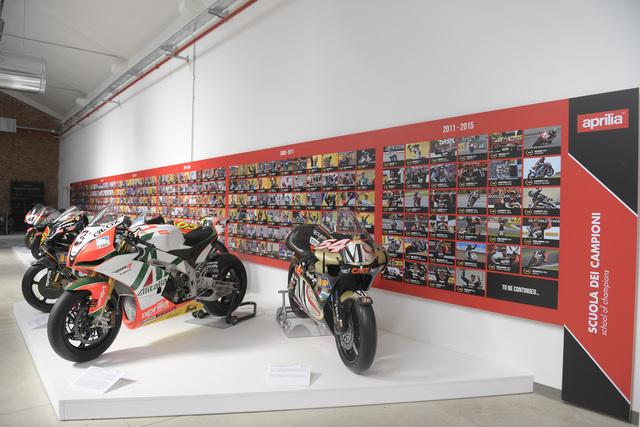
The 2010s: The RSV4 and Superbike Domination
Piaggio's investment produced Aprilia's modern masterpiece: the RSV4, a compact 1000cc V4 superbike unveiled in 2008 that has defined the brand ever since. It went racing in the World Superbike Championship in 2009 and quickly rewrote Aprilia's record.
Max Biaggi delivered Aprilia's first World Superbike title in 2010 — the first WorldSBK crown for an Italian rider — and won a second in 2012, becoming at 41 the oldest champion in the series' history. Aprilia then took the manufacturers' championship in 2013 with a crushingly dominant season, and in 2014 Sylvain Guintoli won the riders' title in a last-race decider, completing a run of consecutive manufacturers' titles. Between road racing, superbikes and off-road, Aprilia's official all-time tally reached 294 Grand Prix wins and 54 world titles, making it the most successful European manufacturer in Grand Prix history. (These are Aprilia's combined rider and manufacturer counts across all disciplines.)
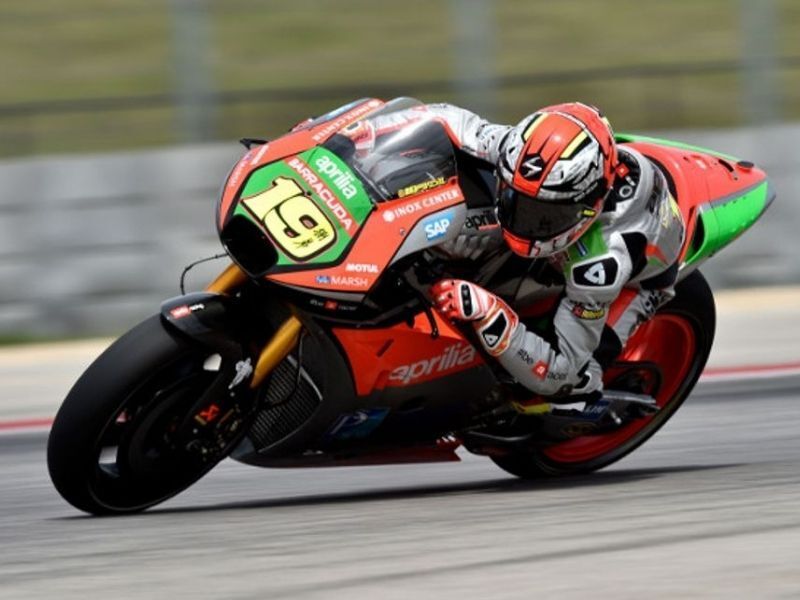
Aprilia also began plotting its MotoGP return. It first re-entered under the "claiming rule" regulations with RSV4-derived ART machines from 2012 to 2014, the class of that sub-field, before committing to a purpose-built prototype. The all-new V4 RS-GP appeared in 2015–2016, run as a factory-backed effort in partnership with the Gresini team, with riders including Álvaro Bautista and Stefan Bradl. It was competitive but not yet a winner — the foundation for what came next.
The 2020s: A True MotoGP Contender
The full factory Aprilia Racing MotoGP team, and years of steady development of the RS-GP, finally turned promise into results.
The rider who led the charge was Aleix Espargaró, who joined in 2017 and grew with the project. He gave Aprilia its first MotoGP podium at Silverstone in 2021, and then, on 3 April 2022 at the Argentine Grand Prix in Termas de Río Hondo, he won — Aprilia's first-ever victory in the premier class, a milestone the marque had chased since the 500cc days of the 1990s. Espargaró went on to finish fourth in the 2022 World Championship, Aprilia's best premier-class season to that point.
The results kept building. At the 2023 Catalan Grand Prix, Espargaró led home teammate Maverick Viñales for Aprilia's first premier-class one-two. In 2024, Viñales won the Grand Prix of the Americas at Austin, becoming one of only a handful of riders in history to win MotoGP races on three different manufacturers. A satellite customer team — RNF, then Trackhouse Racing from 2024 — extended Aprilia's presence on the grid.
Then came the most dramatic move of all. For 2025, Aprilia signed the reigning MotoGP World Champion, Jorge Martín, alongside Marco Bezzecchi, assembling an all-new factory lineup. Martín's first season was wrecked by a series of crashes and injuries that kept him out for much of the year. But Bezzecchi delivered a breakout campaign: three Grand Prix wins — including Aprilia's home-soil-adjacent triumph at Silverstone, the marque's 299th GP win — plus 15 podiums, and a third place in the 2025 World Championship, the best season-long result an Aprilia rider has ever achieved. Aprilia called it its best season yet.
Momentum has carried into 2026. As the season reached its summer break after eleven rounds, Jorge Martín led the World Championship, heading the closest title fight of the modern era — just 24 points covering the top five riders. Bezzecchi, a repeat race winner early in the year, sat fourth after breaking his collarbone in a qualifying crash at the German Grand Prix. For a marque that scored its first premier-class win only in 2022, leading the championship four years later is a remarkable measure of how far Aprilia has come.
Behind the scenes, the racing effort is led by Massimo Rivola, Aprilia Racing's CEO since 2019 and a Formula 1 veteran of two decades, under the ownership of the Piaggio Group.
Aprilia's Modern Range
Aprilia today builds far more than race replicas, though performance runs through everything it makes. The current lineup spans several families:
The V4 flagships — the RSV4 superbike (enlarged to a true 1099cc and around 217 hp in its 2021 overhaul) and its naked sibling, the Tuono V4 — remain the spiritual heirs of the RSV Mille and the RSV4 race bikes.
The 660 parallel-twin platform, introduced from 2020, brought Aprilia's engineering to a lighter, more accessible middleweight class: the RS 660 sportbike, the Tuono 660 naked, and the Tuareg 660 adventure bike.
At the entry level, the RS 457 (and its naked Tuono 457 counterpart) — a 457cc twin built at a Piaggio Group plant in India and launched in 2023 — opened the brand to new riders and new markets. And the SR GT "urban adventure" scooter range continues Aprilia's long heritage in two-wheeled city transport.
Aprilia FAQ
Who owns Aprilia?
Aprilia has been owned by the Piaggio Group since 2004. Piaggio, founded in 1884, also owns Vespa, Moto Guzzi, Gilera and Derbi, and is the largest European two-wheeler manufacturer.
What does the name 'Aprilia' mean?
The name was taken from the Lancia Aprilia, a 1937 sedan the founding Beggio family admired — as confirmed by Ivano Beggio himself. The popular "Venus / month of April" explanation is genuine word etymology but is not the reason the company chose the name.
What was Aprilia's first product, and its first motorcycle?
Aprilia's first powered products were 50cc mopeds in 1968 (the Colibrì and Daniela). Its first true motorcycle was the off-road Scarabeo in 1970.
When did Aprilia first win in MotoGP?
Aprilia won its first premier-class Grand Prix on 3 April 2022, with Aleix Espargaró at the Argentine GP. Its very first Grand Prix win of any kind came much earlier — Loris Reggiani in the 250cc class in 1987.
How successful is Aprilia in racing?
Aprilia is the most successful European manufacturer in Grand Prix history, with an official all-time tally of 294 Grand Prix wins and 54 world titles across road racing, World Superbike and off-road competition — including multiple 125cc and 250cc World Championships and three World Superbike titles.
What is Aprilia's motto?
Aprilia races under the banner "Be A Racer" — a fitting summary of a company that has defined itself, from the very beginning, by competition.