
Benelli is the oldest surviving Italian motorcycle marque, founded in 1911 in the Adriatic city of Pesaro and still building bikes more than a century later. Its story runs through nearly every chapter of European motorcycling — pioneering racing engines of the 1920s, world championships before and after World War II, the world's first six-cylinder production motorcycle, a long decline against Japanese competition, and a modern resurgence under Chinese ownership. This is the full history of the marque from Pesaro, corrected and expanded to be the definitive reference.
The Benelli Garage: A Widow's Gamble (1911)
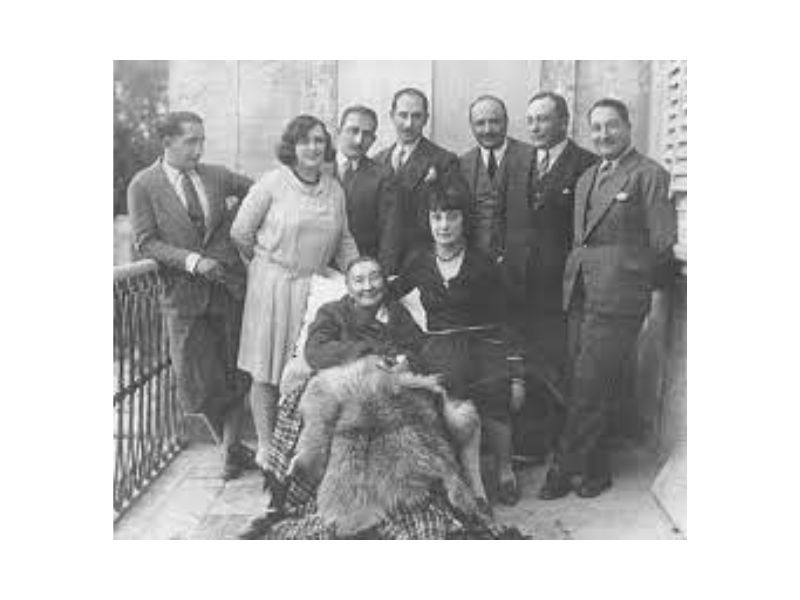
The company was born not from an engineer's ambition but from a mother's need to secure work for her family. In 1911, the widow Teresa Boni Benelli invested all of the family's capital into a small workshop in Pesaro, hoping it would provide steady employment for her six sons: Giuseppe, Giovanni, Francesco, Filippo, Domenico, and Antonio ("Tonino"). She was forward-thinking enough to send the two eldest, Giuseppe and Giovanni, to study engineering in Switzerland.
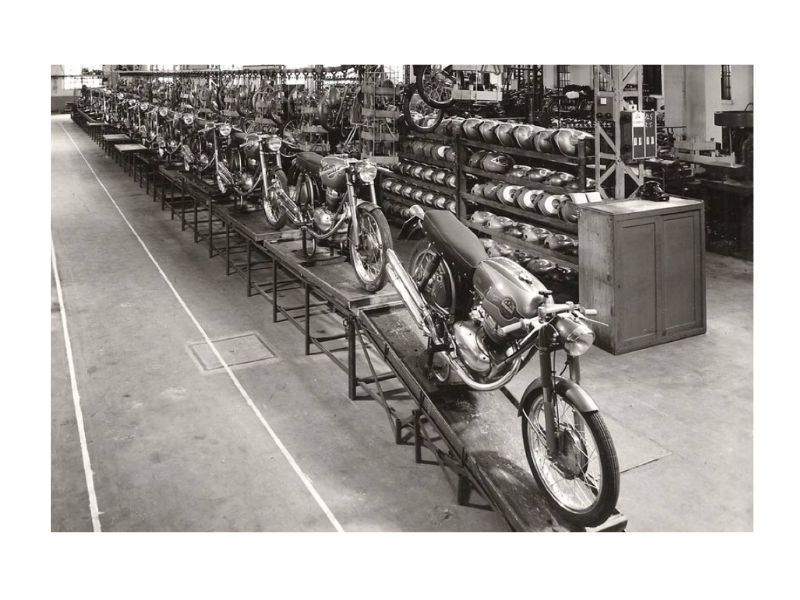
The business began simply as the Benelli Garage, repairing bicycles and motorcycles. Crucially, from the outset it was capable of manufacturing all the spare parts needed for its repairs — a self-reliance that would define the company. During World War I, Benelli did important work repairing components for Italian military machines, and in the process the brothers refined the mechanical expertise that would soon let them build vehicles of their own.
First Engines and the Velomotore (1919–1921)
Benelli's transition from repair shop to manufacturer came at the end of the war. The company presented its first motorcycle to the public in 1919, and in 1920 it built its first complete in-house engine: a single-cylinder two-stroke of 75cc, initially bolted straight onto a bicycle-style frame. That first attempt fell short of the brothers' standards.
The breakthrough arrived in 1921 with the Velomotore, Benelli's first proper production motorcycle, powered by the company's own engine — by then enlarged to 98cc. It was offered as a lightweight two-stroke in two versions, a Touring model and a more potent 125cc Sport. A larger 147cc version followed in 1923. These early machines were reliable and quick for their class, and they gave the young company its first taste of competition success — success that would soon make the Benelli name known across Europe.
The 175 and Tonino Benelli: Racing Glory (1927–1937)
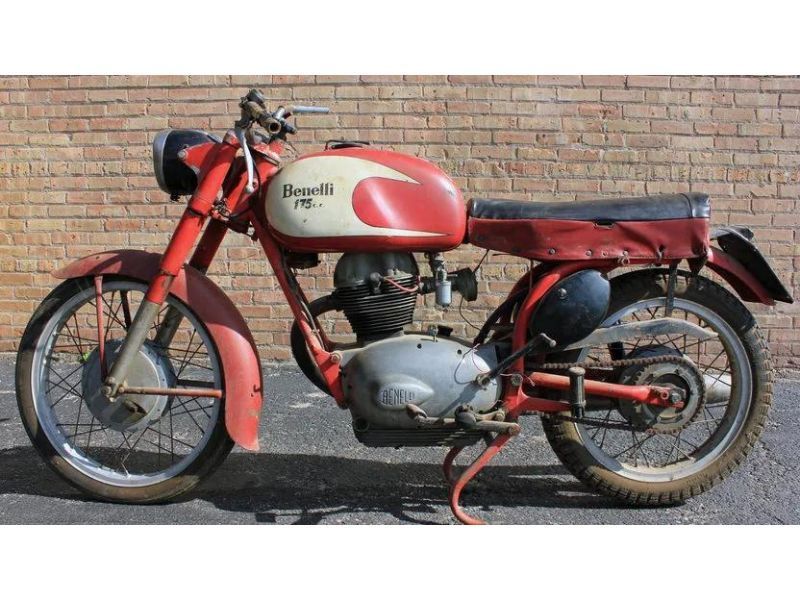
The engine that truly established Benelli's reputation was the 175cc four-stroke of 1927, featuring an overhead camshaft driven by a "cascade" of gears — a bold and sophisticated design for its day. It was the work of the eldest brother, Giuseppe Benelli, who drew inspiration from a theoretical engine study by British designer Edward Turner published in the French magazine Moto Revue in 1925, then reinterpreted it with an ingenious solution to the thermal-expansion problems that plagued such layouts. The design was patented in 1927 (Patent No. 255634) and became the "trademark" of the Pesaro firm, underpinning Benelli's commercial and sporting success right up to World War II.
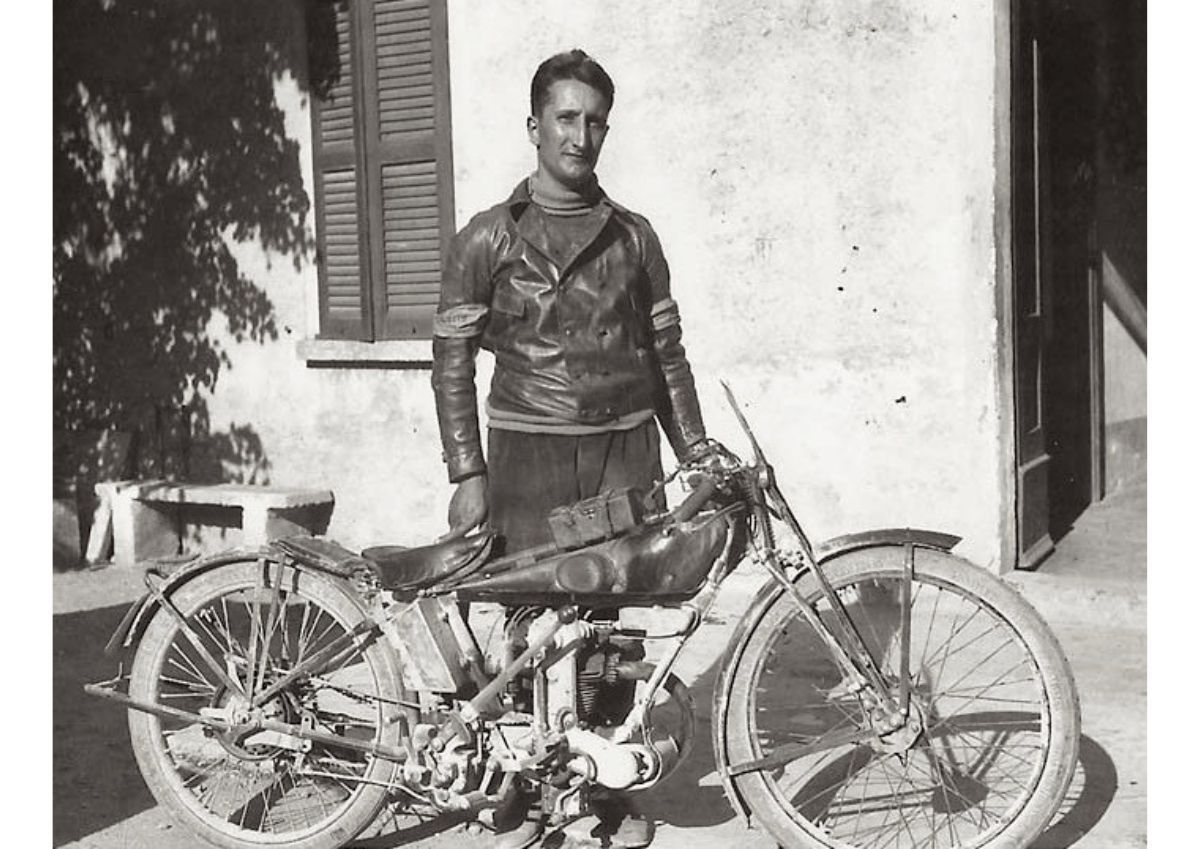
On the track, the family had its own star. The youngest brother, Antonio "Tonino" Benelli — nicknamed "the terrible" — proved a rider of extraordinary natural talent. Aboard the racing 175, he won four Italian championship titles in five years: 1927, 1928, and 1930 with the single-overhead-cam (SOHC) engine, and 1931 with the twin-cam (DOHC) version. In 1931 he also took the runner-up spot in the European Championship, behind his own teammate Carlo Baschieri.
Tonino's racing career ended prematurely with a serious crash at the Circuit of Tigullio in 1932. Tragically, he died a few years later, on 27 September 1937, following a road accident — a devastating loss for both the family and the company. (Many older accounts, including earlier versions of this page, give the year as 1939; the correct date is 1937.)
Benelli's Pre-War Racing Beyond Tonino (1934–1940)
Benelli's competition program did not stop with Tonino's retirement. The bikes kept winning: the company took the 1934 European (FICM) title in the 175 class with Belgian rider Yvan Goor, and in 1935 set the class world speed record for the mile and the flying kilometre with Milanese rider Raffaele Alberti, who reached 182.5 km/h on a twin-cam 250 Sport. In 1939, Englishman Ted Mellors won the Lightweight 250cc race at the Isle of Man TT on a twin-cam 250.
Riding this momentum, Benelli developed one of the most advanced racing engines of the era: a supercharged, liquid-cooled, twin-cam inline-four 250cc credited with 52 hp at 10,000 rpm and a top speed of around 230 km/h. It was intended to dominate the 1940 season, but the outbreak of World War II ended those plans, and supercharging was banned in the post-war rulebook — so this remarkable machine never raced in official competition.
World War II and Near-Destruction
Like most Italian manufacturers, Benelli was pressed into war production, and its Pesaro factory paid a heavy price. Much of the plant was destroyed by bombing, its machinery scattered or damaged. Rebuilding took three or four years amid genuine hardship and scarcity.
To replenish its meagre finances, the company bought up roughly a thousand motorcycles abandoned by the retreating armies on Italian battlefields and refurbished them for civilian use — a resourceful stopgap that helped keep the doors open while proper production resumed.
Post-War Rebirth: Letizia and the Leoncino (late 1940s–1960)
With the eldest brother departing (see below), leadership of the factory passed to the second brother, Giovanni Benelli, an outstanding organizer even if he lacked Giuseppe's design flair. Giovanni set a clear brief for the comeback machine: it must be light, reliable, and affordable.
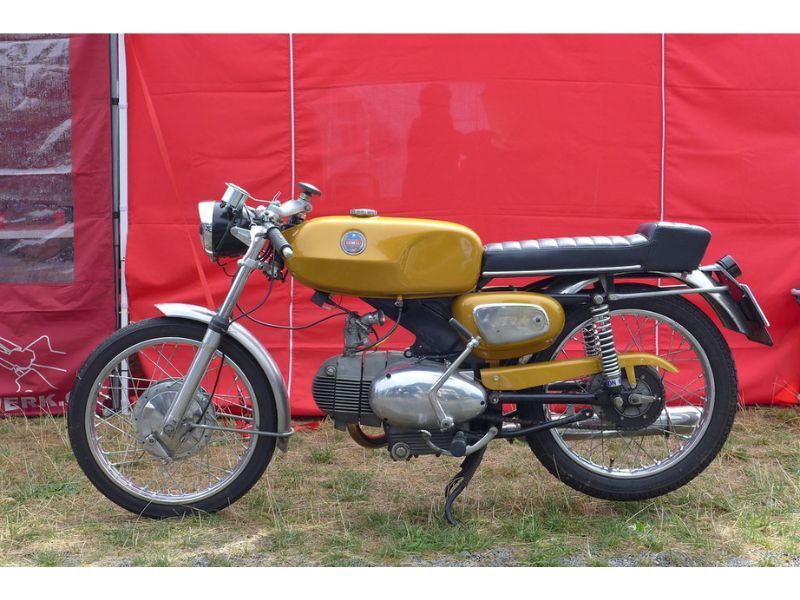
The result was the Letizia, built around an inexpensive 98cc two-stroke engine on a simple but well-sprung frame. The Letizia became the direct forerunner of Benelli's most beloved post-war model, the Leoncino ("little lion"), produced from 1950 to 1960 in roughly 45,000 units. Most Leoncinos used a 125cc two-stroke, though a 150cc three-wheeler and a short-lived 125cc four-stroke (with the old cascade-gear valvetrain) were also offered. Light, dependable, and charismatic, the Leoncino became the definitive Benelli of the 1950s and a fixture of Italy's great road races.
The Motobi Split — and the Family Reunited (late 1940s–1962)
Not all of the brothers pulled in the same direction. After irreconcilable disputes over production strategy in the late 1940s, Giuseppe Benelli left the family firm. He first founded a small car venture (BBC Automobili) and then a motorcycle company that became known as Motobi, based in Pesaro.
Motobi built distinctive singles with a horizontal cylinder whose streamlined casting earned it the nickname "the egg" — a layout that actually predated Aermacchi's famous horizontal engines. Starting with two- and four-strokes and moving to four-strokes exclusively by the mid-1950s, Motobi enjoyed strong sales and racked up more than 1,000 race wins during the 1950s and 1960s.
In 1962, the larger Benelli company absorbed Motobi, bringing the family back together under the Gruppo Benelli-Motobi banner. The merger swelled the combined workforce to around 550 employees and lifted production to roughly 300 machines per day.
Post-War World Champions: Ambrosini (1950) and the American Years (1960s)
Benelli's return to the top of world racing came in 1950, when Dario Ambrosini won the 250cc World Championship — also taking that year's Isle of Man TT and the Italian 250 title on the twin-cam single. It was the marque's first world crown.
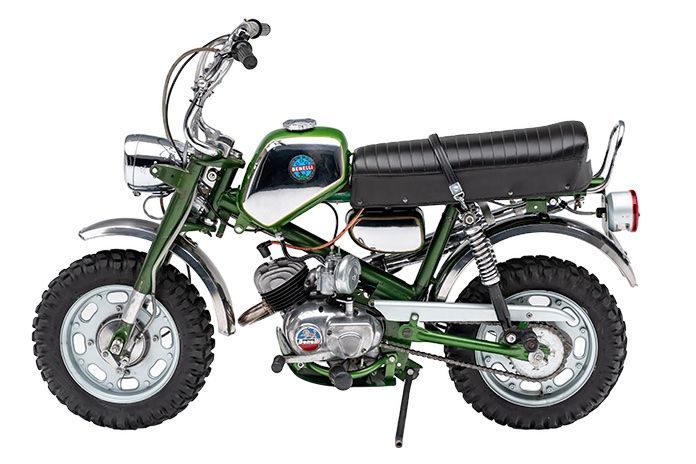
Through the 1960s, at a time of deep crisis in the Italian domestic market, Benelli stayed afloat largely on exports to the United States, selling through the importer Cosmopolitan and the retail giant Montgomery Ward. Key models of this era included:
- Tornado 650 — a twin-cylinder machine launched first in the US and then Europe, notable for a Metisse-type chassis associated with actor and importer figurehead Steve McQueen. It earned a reputation for reliability and performance despite a hefty 480 lb (220 kg) kerb weight, with a claimed 57 hp and 117 mph top speed. It was discontinued after 1974.
- Mojave 260/360 — using the Tornado chassis with an enlarged 175cc-derived four-stroke single, offered in standard and Scrambler forms.
- Volcano — a small-wheeled "scooter" derived from the Mini Cross, with a 180cc engine.
- A range of small-wheeled mopeds and scooters (Buzzer, Hurricane, Dynamo, Hornet) tailored for the US market.
By the late 1960s, however, the arrival of technically superior Japanese machinery — Hondas with overhead cams and electric starters — left Benelli's largely single-cylinder pushrod lineup looking dated, exactly as it did for British marques like Norton, BSA, and Triumph. The company slid into economic difficulty.
The De Tomaso Era: The 500 Quattro and the Six-Cylinder Sei (1971–1980s)
In 1971, the struggling company was bought by the Italian-Argentine industrialist Alejandro de Tomaso, a powerful and controversial figure who also controlled De Tomaso Automobili, Maserati, Innocenti, Ghia, and Vignale — and who would acquire Benelli's old racing rival Moto Guzzi in 1973. De Tomaso specialized in buying troubled companies, restructuring them, and reselling for a profit, an approach that brought Benelli both fresh ambition and, ultimately, instability.
To take on the Japanese quickly, De Tomaso instructed his engineers to base a new engine closely on the Honda CB500 Four. This produced the 500 Quattro (1974), which in turn formed the basis of Benelli's most famous machine of all: the 750 Sei.
Unveiled in 1972 and reaching customers around 1974–75, the 750 Sei was the world's first production motorcycle with an inline six-cylinder engine — a genuine landmark that beat Honda's CBX and Kawasaki's Z1300 to market by several years. Reviewers praised its smooth, flexible engine, exceptional roadholding, and excellent brakes. It was named "Motorcycle of the Year" in 1974, offered around 75 hp and a 200 km/h top speed, and roughly 3,200 were built through the late 1970s. In 1979 the design grew into the 900 Sei, with a larger bore and stroke, six-into-two exhausts, and a small fairing; fewer than 2,000 were made before it ended production in the mid-1980s. Thanks to their rarity and engineering significance, the Sei models — and Benellis of the 1970s and 1980s generally — often command a premium on the classic market today.
Despite these headline machines, chronic under-investment in plant and research, uneven build quality, and a weak dealer network undermined the business. A subsequent merger with Moto Guzzi under the Guzzi-Benelli Moto (G.B.M.) umbrella effectively hollowed the Benelli marque out.
Grand Prix Fours and the Carruthers World Title (1962–1972)
The merged Benelli-Motobi group also produced some of the most exotic racing hardware of the 1960s: multi-cylinder 250 and 350cc Grand Prix fours with twin overhead camshafts. On these machines Benelli won a string of Italian championships — with Tarquinio Provini (250cc, 1965 and 1966), Silvio Grassetti (350cc, 1967), and Renzo Pasolini (250cc and 350cc, 1968 and 1969).
The crowning achievement came in 1969, when Australian Kelvin Carruthers won the 250cc World Championship and the Isle of Man TT on the four-cylinder Benelli — the marque's second world title, and one of the last hurrahs of the multi-cylinder two-stroke-versus-four-stroke era before rule changes swept such machines away. In a memorable footnote, at the 1972 Trofeo Pesaro the young Finn Jarno Saarinen won both the 500 and 350 classes on brand-new four-cylinder Benellis, beating Giacomo Agostini's MV Agusta and Pasolini's Aermacchi. But following the death of driver Piers Courage in his De Tomaso Formula 1 car, De Tomaso lost his appetite for racing, and this proved the works team's final competitive campaign until the 2000s.
Decline, False Starts, and Revival Attempts (1989–2004)
After the De Tomaso years, Benelli passed through a difficult period of near-dormancy and repeated relaunch attempts. A first revival in 1989, backed by Pesaro industrialist Giancarlo Selci — founder of the woodworking-machinery firm Biesse and, fittingly, a former machine operator at the Benelli factory — brought the brand back into Italian hands but achieved only fleeting success with scooters.
The decisive turning point came in December 1995, when the 28-year-old Andrea Merloni, heir to the famous Marche household-appliance dynasty and a passionate motorcyclist, took over the brand. Merloni opened a new factory (still Benelli's home today), hired young designers, and moved quickly to generate cash with a run of scooters and small bikes — the Adiva (the world's first scooter with a folding hard roof), the Velvet (sold until 2012), the sporty 491, the K2, and the best-selling Pepe.
Merloni's real ambition, though, was a flagship superbike. In 1999 he hired ex-Cagiva engineer Riccardo Rosa, and the result was the striking Tornado Tre — a 900cc inline-triple sportbike (later enlarged to 1130cc) with radiators mounted under the tail and cooled by twin extractor fans, wrapped in an innovative mixed aluminium-and-steel frame. The Tornado Tre 900 launched in 2002, followed a few years later by the TNT roadster. True to the racing spirit, Benelli returned to the World Superbike Championship in 2001–2002 with Australian Peter Goddard, finishing a respectable 36th in 2001 and 22nd in 2002 against fierce factory competition. But the heavy costs of the Tornado program were never recovered through sales, and Merloni eventually decided to stop.
Chinese Ownership and Global Resurgence (2005–Present)
In 2005, Benelli was acquired by China's Qianjiang Motor Group (QJ), one of that country's largest motorcycle manufacturers and already owner of the Keeway and Generic brands. Since 2016, Qianjiang — and with it Benelli — has been controlled by the Geely Holding Group, the Chinese automotive giant that also owns Volvo Cars.
Crucially, Qianjiang kept design, development, and marketing in Pesaro, Italy, while shifting volume manufacturing to Geely's modern facility in Wenling, China. Production of the inline-triple engines was brought back in-house, and the scooter range restarted with Chinese-sourced engines.
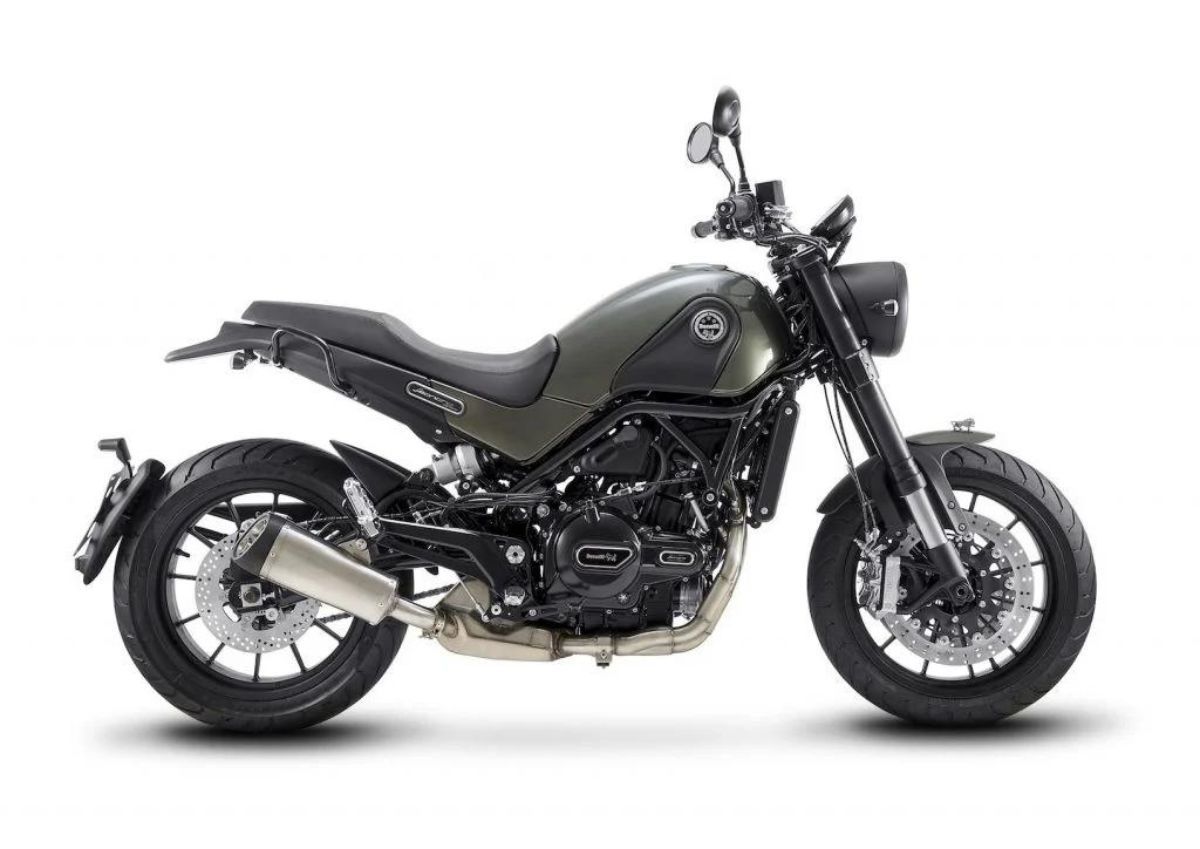
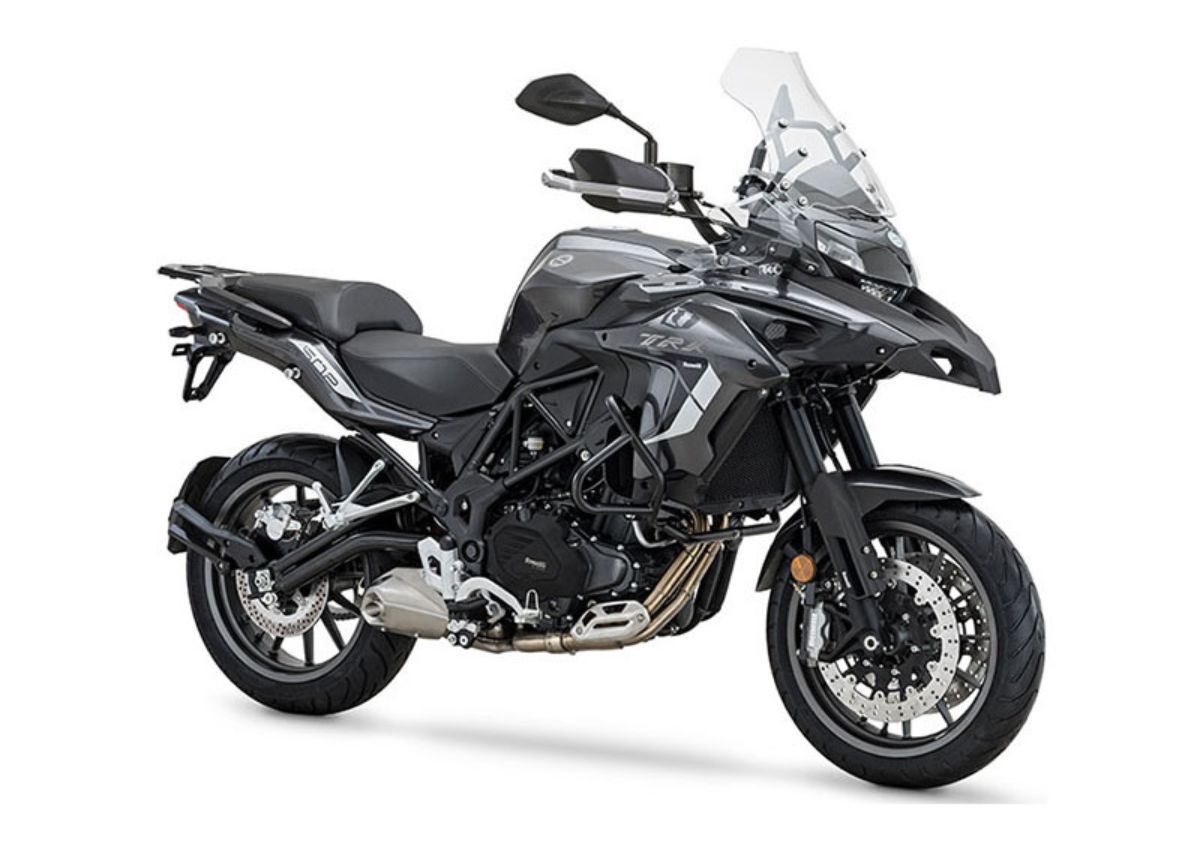
For roughly a decade Benelli QJ largely continued the previous management's projects, but 2016 marked a genuine breakthrough. The Leoncino 500 and the TRK 502 — both still built in Pesaro at launch and sharing a 500cc parallel-twin engine — revived the brand's fortunes worldwide. The TRK 502 in particular became a phenomenon: an affordable, capable middleweight adventure-tourer that became the best-selling motorcycle in Italy for three consecutive years (2020–2022). In 2021 Benelli marked its 110th anniversary as one of the world's longest-running motorcycle manufacturers, its distinctive blend of Italian design and Chinese scale proving commercially potent.
Benelli Today: The Current Range
Benelli now offers one of the broadest lineups in the middleweight and lightweight market, spanning single-, twin-, and four-cylinder machines. Recent and current highlights include:
- Adventure / Touring — the long-running TRK 502 and TRK 502 X, joined by the more powerful TRK 702 and TRK 702 X, built around a 698cc parallel-twin producing roughly 70 hp. The smaller TRK 251 and lightweight BKX 300 / BKX 300 S round out the adventure family.
- Naked / Roadster — the TNT series and the flagship 752S parallel-twin (updated for 2026 with Brembo calipers, a slipper clutch, and a quickshifter), plus small-displacement BN and TNT 125 commuters.
- Sport — a new-generation Tornado, previewed as the Tornado 500 and productionized as the Tornado 550 around a 554cc parallel twin making about 61 hp, with Marzocchi suspension, Brembo brakes, and a large connected TFT display.
- Classic / Scrambler — the Imperiale 400 retro roadster and the extensive Leoncino family (250, 500, 800, and Trail variants) that references the marque's 1950s heritage.
- Cruiser & Scooters — the 502C cruiser and a range of urban scooters.
Design and R&D remain rooted in Pesaro, where the Officine Benelli museum — housed in a surviving building of the original factory and run by the "Tonino Benelli" Moto Club and the Benelli Historical Register — preserves around 200 Benelli and Motobi machines and tells the full century-plus story to visitors.
Racing Honours at a Glance
Benelli's competition record is one of the richest in Italian motorcycling:
- Grand Prix World Championships (250cc): Dario Ambrosini (1950) and Kelvin Carruthers (1969).
- Isle of Man TT (250cc): Ted Mellors (1939), Dario Ambrosini (1950), Kelvin Carruthers (1969).
- European (FICM) titles: 175 class in 1934 with Yvan Goor (plus Tonino's 1931 runner-up).
- Italian championships: four 175 titles for Tonino Benelli (1927, 1928, 1930, 1931); further Italian titles with Baschieri, Rossetti, Cavaciuti, Ambrosini, Provini (1965–66), Grassetti (1967), and Pasolini (1968–69).
- World speed record: 250 class mile and flying kilometre at 182.5 km/h (Raffaele Alberti, 1935).
- Modern era: World Superbike entries with the Tornado Tre 900 (2001–2002).
Benelli Motorcycles and Benelli Firearms
The famous Benelli shotguns share the family name and origin but are a separate company. Benelli Armi S.p.A. was founded in 1967 in Urbino by members of the Benelli family as an offshoot of the motorcycle business. Its fortunes were transformed by the Bologna designer Bruno Civolani, whose inertia-driven action made possible a new generation of reliable semi-automatic shotguns. Benelli Armi has been owned by Beretta since 2000, and operates entirely independently of the motorcycle marque.
Key Milestones
- 1911 — Teresa Boni Benelli founds the Benelli Garage in Pesaro to employ her six sons.
- 1919–1921 — First motorcycle shown (1919); first in-house 75cc engine (1920); first production model, the 98cc Velomotore (1921).
- 1927 — Giuseppe Benelli's patented 175cc OHC four-stroke debuts; Tonino wins the first of four Italian titles.
- 1937 — Tonino Benelli dies in a road accident.
- 1939 — Ted Mellors wins the Lightweight 250 TT for Benelli.
- 1940s — Factory rebuilt after wartime bombing; Giuseppe leaves to found Motobi.
- 1950 — Dario Ambrosini wins the 250cc World Championship; Leoncino enters production.
- 1962 — Benelli absorbs Motobi, reuniting the family.
- 1969 — Kelvin Carruthers wins the 250cc World Championship on the four-cylinder Benelli.
- 1971 — Alejandro de Tomaso acquires Benelli.
- 1972–1974 — The 750 Sei, the world's first six-cylinder production motorcycle, is revealed and launched.
- 1989 / 1995 — Revival attempts under Giancarlo Selci, then Andrea Merloni.
- 2002 — Tornado Tre 900 superbike launched; WSBK return.
- 2005 — Qianjiang Group acquires Benelli.
- 2016 — Geely takes control of Qianjiang; Leoncino 500 and TRK 502 spark a global resurgence.
- 2020–2022 — TRK 502 is Italy's best-selling motorcycle three years running.
- 2021 — Benelli celebrates its 110th anniversary.
Noteworthy Statistics
- At its pre-war peak Benelli employed around 800 people, before the factory was devastated during World War II.
- Roughly 45,000 Leoncinos were produced between 1950 and 1960.
- The 750 Sei — the first six-cylinder production bike — was built in about 3,200 units; fewer than 2,000 of the later 900 Sei were made.
- Benelli's parent, the Qianjiang (QJ) Group, is among China's largest motorcycle makers; its Wenling facility produces well over a million vehicles a year with a workforce numbering in the tens of thousands.
- Founded in 1911, Benelli has survived two world wars, multiple recessions, and repeated changes of ownership to remain one of the oldest — and by many accounts the oldest surviving — Italian motorcycle manufacturers, predating Moto Guzzi by a decade.
Benelli Motorcycles FAQ
Where are Benelli motorcycles made?
Benelli motorcycles are manufactured at the Qianjiang/Geely facility in Wenling, China, while design, development, and marketing are carried out at the Benelli R&D headquarters in Pesaro, Italy.
What was Benelli's first motorcycle?
The Velomotore of 1921 — a lightweight two-stroke using Benelli's own 98cc engine, offered as a Touring model and a more powerful 125cc Sport version. It followed the company's first in-house 75cc engine of 1920.
Who was Tonino Benelli?
Antonio "Tonino" Benelli was the youngest of the six brothers and the family's star racer. He won four Italian 175cc championships (1927, 1928, 1930, 1931) before a 1932 crash ended his career; he died in a road accident on 27 September 1937.
What is the Benelli Sei?
The 750 Sei, launched in the mid-1970s under Alejandro de Tomaso, was the world's first production motorcycle with an inline six-cylinder engine. It was later enlarged into the 900 Sei.
How many world championships has Benelli won?
Benelli won two Grand Prix world titles, both in the 250cc class: Dario Ambrosini in 1950 and Kelvin Carruthers in 1969.
Who owns Benelli today?
Benelli has been owned since 2005 by China's Qianjiang Motor Group, which has itself been controlled by the Geely Holding Group since 2016.
What's the relationship between Benelli motorcycles and Benelli firearms?
They are separate companies sharing a family origin. Benelli Armi, the firearms maker, was founded in Urbino in 1967 as an offshoot of the motorcycle business and has been owned by Beretta since 2000.
When was Benelli founded?
Benelli was established in 1911 in Pesaro, Italy, when the widow Teresa Benelli opened a repair garage to support her six sons. It grew from servicing bicycles and motorcycles into building its own machines.