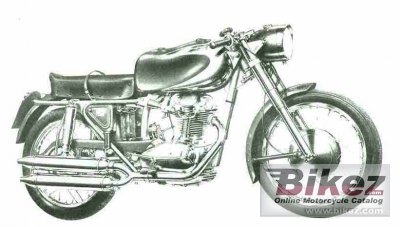
1960 Ducati 125 Bronco

Specifications
- Category
- Sport
- Displacement
- 124.4 ccm (7.59 cubic inches)
- Displacement (cc)
- 124.40
- Engine details
- Single cylinder, four-stroke
- Power
- 6.4 HP (4.7 kW) @ 6500 RPM
- Top speed
- 85.0 km/h (52.8 mph)
- Compression
- 6.8:1
- Bore × stroke
- 55.2 x 52.0 mm (2.2 x 2.0 inches)
- Fuel system
- Carburettor. Dell´Orto ME18BS
- Fuel control
- Overhead Valves (OHV)
- Ignition
- Magneto
- Lubrication
- Dry Sump
- Cooling
- Air
- Transmission
- Chain (final drive)
- Frame
- Tubular Steel
- Front suspension
- Marzocchi Telescopic Hydraulic Damped Fork
- Rear suspension
- Dual shocks
- Front tyre
- 2.75-16
- Rear tyre
- 2.75-16
- Front brakes
- Expanding brake (drum brake)
- Rear brakes
- Expanding brake (drum brake)
- Dry weight
- 91.0 kg (200.6 pounds)
- Seat height
- 790 mm (31.1 inches) If adjustable, lowest setting.
- Height
- 980 mm (38.6 inches)
- Length
- 1900 mm (74.8 inches)
- Width
- 820 mm (32.3 inches)
- Wheelbase
- 1290 mm (50.8 inches)
- Fuel capacity
- 13.00 litres (3.43 US gallons)
- Starter
- Kick
The 1960 Ducati 125 Bronco
The 1960 Ducati 125 Bronco represented Ducati's entry-level offering, serving as the gateway model into the Italian brand's lineup during the early 1960s. This small-displacement motorcycle delivered practical transportation with a distinctly European character, featuring a modest single-cylinder engine that prioritized reliability and fuel economy over outright performance. The Bronco rewarded patient, steady riding rather than aggressive acceleration, making it well-suited for urban commuting and casual weekend rides. Its relatively low seat height and manageable weight made it approachable for newer riders, while the 13-liter fuel tank provided decent range for its intended use. The 1960 model carried over without significant mechanical changes from the prior year — buyers comparing it to a 1959 example should focus on mileage, service history, and condition rather than spec differences. The 1960 Ducati 125 Bronco appeals primarily to collectors interested in preserving Ducati's early history, particularly those drawn to the brand's pre-superbike era when the company built practical transportation machines rather than performance exotics.